What Causes White Mineral Buildup on Faucets and Fixtures?
That chalky ring on the faucet. The cloudy film on the shower door. The white crust inside the kettle. Homeowners often call this chalk, lime, or hard-water deposit. In most cases, what you are seeing is white mineral buildup left behind when hard water dries.
This guide explains what causes white mineral buildup, how to tell it apart from soap scum or iron staining, and when a water softener is the right fix. Rochester Water Conditioning starts the same way every time: test the water, identify the problem, then recommend the solution that matches.
What causes white mineral buildup?
White mineral buildup is usually scale from hardness minerals, mainly calcium and magnesium. Those minerals dissolve in groundwater and stay dissolved in city or well water that feeds your home. When water evaporates on a faucet, showerhead, glass door, or heating element, the minerals stay behind as a white or off-white crust.
Heat speeds the process. That is why buildup often shows up first on:
- Faucet aerators and showerheads
- The inside of kettles, coffee makers, and humidifiers
- Water heaters and dishwasher spray arms
- Glass shower doors and chrome fixtures after the water dries
If you also notice spotted dishes or soap that will not lather, you are likely seeing the same hardness problem in another form. Our post on cloudy glasses after washing covers that kitchen clue in more detail.
Is it hard water scale, soap scum, or something else?
Not every white film is the same. A quick look can save you from treating the wrong problem.
Hard water scale
Scale feels hard and chalky. It often builds in rings where water drips and dries. Vinegar or a mild acid cleaner may soften it, but the deposit returns if the water stays hard. Scale is the classic form of that chalky deposit.
Soap scum
Soap scum is a reaction between soap and hardness minerals. It can look cloudy or greasy on tub walls and shower doors. Softening the water usually reduces both scale and soap scum, because both depend on calcium and magnesium.
Orange or rust-colored stains
Orange, brown, or reddish stains are a different story. Those often point to iron, not ordinary hardness. A softener alone may not be the right tool. See do I need an iron filter or a water softener? when staining is the main complaint.
Where homeowners notice white mineral buildup first
In Southeast Michigan homes on municipal water or private wells, the buildup tends to show up in the same places:
- Bathroom fixtures — crust around faucet bases, clogged showerheads, film on glass
- Kitchen — spotted glassware, white rings in pots, scale on the tea kettle
- Laundry — stiff towels and soap that needs more product to work
- Appliances — shorter life or reduced efficiency in water heaters, dishwashers, and washing machines when scale coats heating elements and valves
Those everyday signs of hard water in Troy, Auburn Hills, and Shelby Township homes are common throughout the Rochester Hills service area. The cause is usually the same: hardness minerals in the water supply.
Will a water softener stop white mineral buildup?
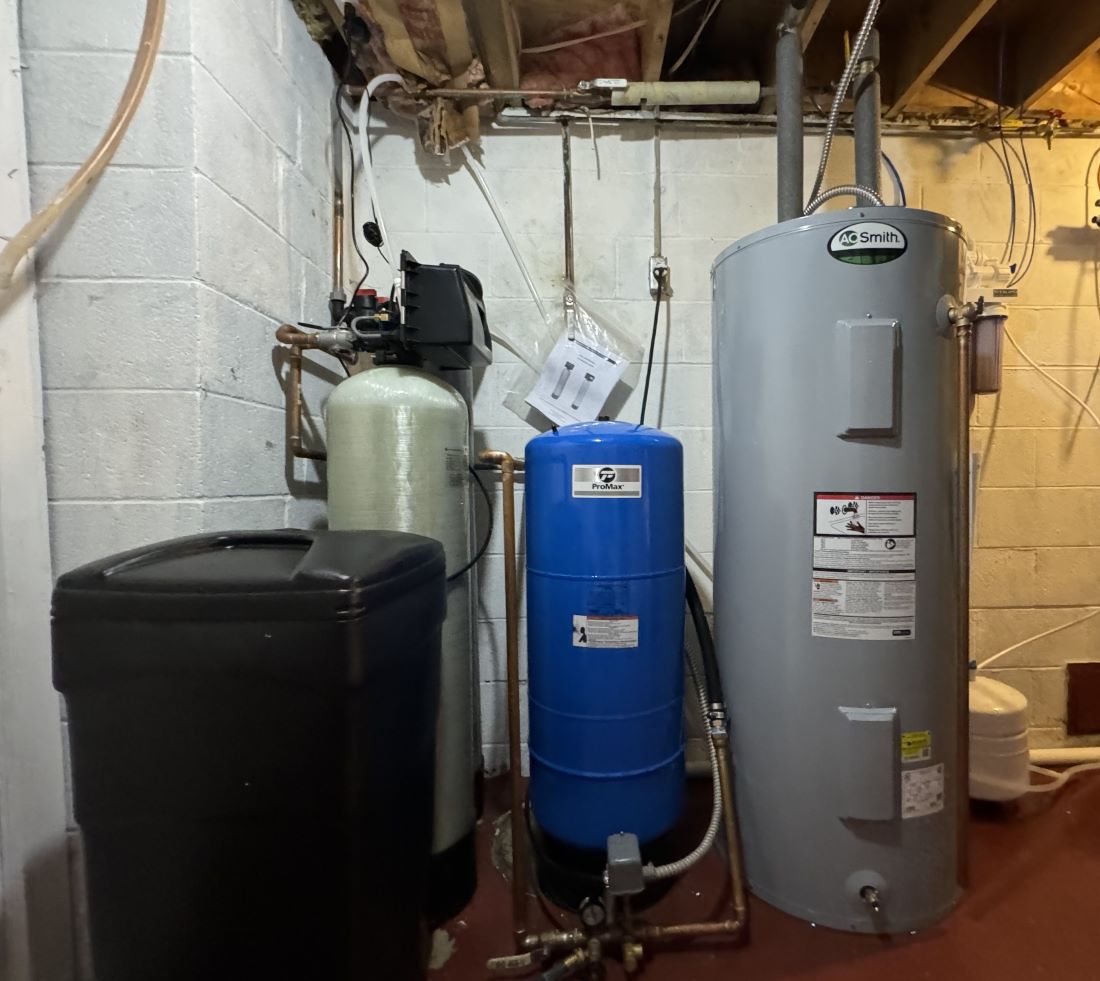
In most homes, yes — when the buildup is from hardness. A water softener exchanges calcium and magnesium for sodium (or sometimes potassium). Softened water leaves far less scale on fixtures and inside appliances. That is why softener service is the usual answer when white mineral buildup is the main complaint.
A softener is not a universal filter. It does not remove every taste, odor, or contaminant. Chlorine taste at the kitchen tap, sulfur odor, or iron staining each need a different approach. For drinking-water taste questions, an under-sink reverse osmosis system is often the better fit. For whole-home taste or sediment concerns, see how whole-house filtration vs reverse osmosis compare.
Our approach stays simple. We test first. If hardness is high and scale matches what we see in the home, we discuss water softener service, installation, and repair options that fit the results. If the test shows something else, we say so.
Cleaning scale vs fixing the water
Cleaning helps in the short term. A soft cloth and a vinegar soak can loosen light scale on showerheads and aerators. Descaling a kettle or coffee maker can restore flow. Those steps do not change the water itself. As long as hard water keeps running through the house, the scale returns.
Fixing the water means reducing hardness at the point where water enters the home, or treating drinking water at the sink when that is the only concern. Many homeowners do both: a softener for the whole house, plus RO at the kitchen for drinking and cooking. The right mix depends on the test, not on a one-size guess.
Hard water help near Rochester Hills
Rochester Water Conditioning is based in Rochester Hills and works with both city water and private wells. If you are comparing options in nearby communities, start here:
For a broader overview of how softening works, see our complete guide to water softening. For the day-to-day symptoms many neighbors report, read the signs of hard water in Troy, Auburn Hills, and Shelby Township.
Quick FAQ
What causes white mineral buildup on faucets?
Hard water that contains calcium and magnesium. When droplets dry on metal or glass, the minerals remain as white scale. Heat and frequent dripping make it worse.
Is white mineral buildup harmful?
Hardness minerals are common in drinking water and are not the same as bacteria or chemical contamination. The practical problems are scale on fixtures, spotted glassware, extra soap use, and mineral coating inside appliances. A water test is still the right first step so you know what you are dealing with.
Can I stop the buildup without a softener?
You can clean fixtures and use point-of-use filters for drinking water, but whole-house scale usually continues until hardness is reduced. Whether a softener, a filter, RO, or a combination is best depends on your test results and goals.
How do I know if my water is hard?
Spotting, scale, poor lather, and stiff laundry are common clues. The only clear answer is a water test that measures hardness (and checks for other issues when symptoms point that way).
Ready to stop the scale? Call Rochester Water Conditioning
Hard-water scale is a homeowner problem with a clear path forward. Test the water. Confirm whether hardness is the cause. Then choose the treatment that matches — often a softener for whole-home scale, with filtration or RO when taste or other issues are also present. Call us at (248) 651-5238 or contact us online to schedule a free water test.