Types of Water Softener Salt: Which One Should You Use?
Lift the lid on your brine tank and you will find salt. But stand in the salt aisle at a hardware store and the choices pile up fast: pellets, crystals, rock salt, potassium, “iron fighter” bags, and dealer-only products like Dura-Cube®. If you have ever wondered which types of water softener salt are right for your system, you are not alone. Many homeowners around Rochester Hills ask the same question.
The short answer: most residential softeners run well on a clean, high-purity salt. However, the different types of water softener salt do not all behave the same way. The wrong salt can leave sludge in the brine tank, form a hard salt bridge, or simply cost you more than it should. Below, Rochester Water Conditioning explains the main options in plain language.
What does the salt actually do?
A water softener removes hardness minerals, mainly calcium and magnesium, using a bed of resin beads. Over time, those beads fill up with hardness. During regeneration, the softener rinses the resin with salty brine from the brine tank. That brine pulls the hardness off the beads and sends it down the drain, and the resin is ready to work again.
In other words, the salt does not go into your water to “soften” it directly. Instead, it recharges the resin. That is why salt purity and how the salt behaves in the tank matter more than the brand name on the bag.
The main types of water softener salt
Evaporated salt pellets
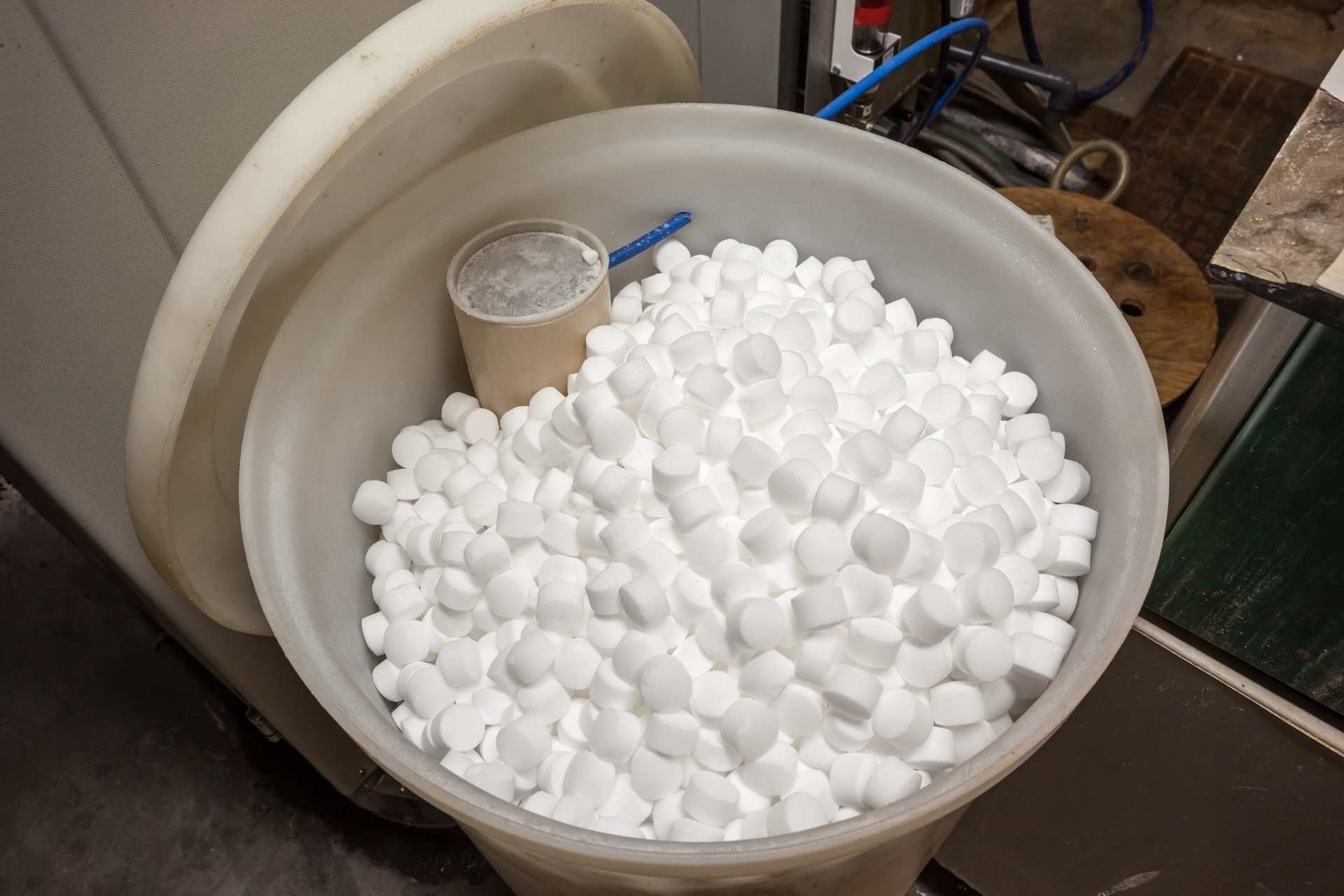
Evaporated pellets are made by evaporating brine and pressing the salt into uniform pellets. They are typically very pure, so they leave little insoluble residue behind. As a result, many homeowners use them as their everyday choice. Pellets are easy to pour and fit most brine tanks.
Solar salt crystals
Solar salt is made by letting seawater or brine evaporate in the sun. It usually comes as crystals or extra-coarse chunks. It is a reasonably pure product that works in many home softeners. Like any salt, it should be checked now and then for bridging.
Rock salt
Rock salt is mined and is usually the least expensive option. The trade-off is that it contains more insoluble material. Over time, that material settles at the bottom of the brine tank as sediment. Consequently, the tank needs cleaning more often, and the dirt can interfere with the brine valve. For most home softeners, the savings are rarely worth it.
Compacted cube salt (Dura-Cube®)
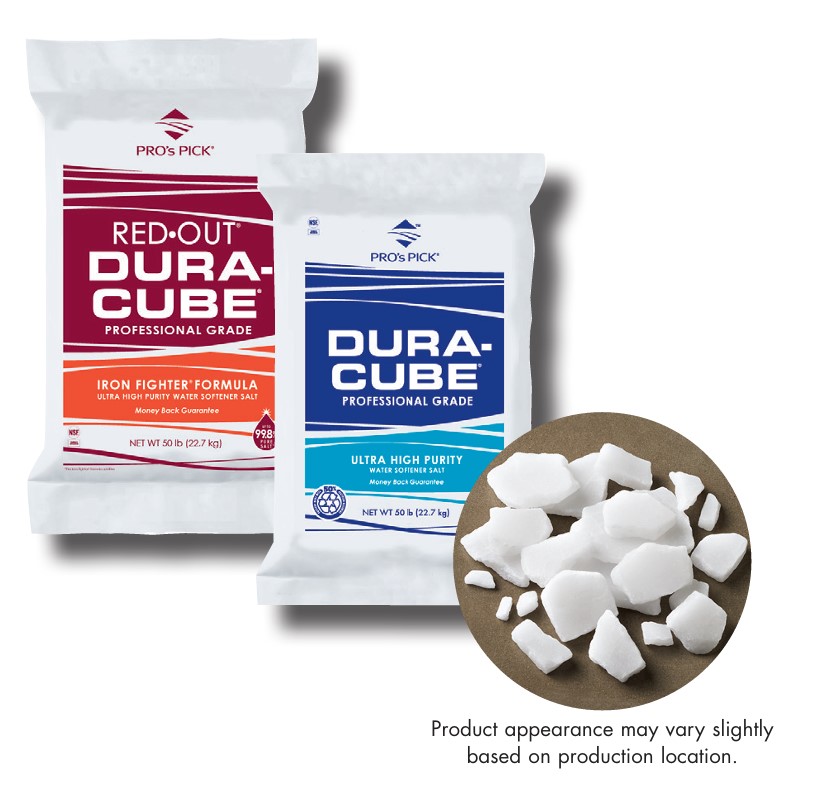
Dura-Cube is a compacted, cube-shaped softener salt made by Cargill under its Pro’s Pick® line. Cargill offers it through professional water conditioning dealers rather than general retail stores. The manufacturer describes it as high-purity salt, compacted for hardness to help resist mushing and bridging in the brine tank. Rochester Water Conditioning delivers Dura-Cube, and it is the salt we recommend to most of our softener customers. You can learn more on our Dura-Cube water softener salt delivery page.
Potassium chloride
Potassium chloride is a sodium-free alternative to standard salt. Some households choose it for personal reasons, though it usually costs noticeably more. In addition, your softener settings may need adjusting when you switch, so ask us first.
Salt with iron-fighting additives
Some products include an additive meant to help with rust staining and iron buildup on the resin. These can be useful in the right situation. Still, they are not a replacement for proper iron treatment when iron levels are high. If you see orange stains or rusty water, read our guide on whether you need an iron filter or a water softener, and get the water tested before you buy specialty salt.
Salt bridges and mushing: why salt type matters
Two problems cause many of the “my softener stopped working” calls we get. Both are related to the salt itself.
- Salt bridge: A hard crust forms across the brine tank. The tank looks full, but there is an empty pocket underneath, so the water never touches the salt. Humidity and overfilling the tank can make bridging more likely.
- Mushing: Fine salt dissolves and re-forms into a thick sludge at the bottom of the tank. That sludge can block the brine pickup, so regeneration does not happen properly.
Warning signs include hard-water spots returning, soap that will not lather, or a salt level that never seems to drop. If you notice cloudy glasses after washing again after months of clear dishes, check the brine tank first. You can gently break up a bridge with a broom handle. If the problem keeps coming back, or there is heavy sludge in the tank, our water softener service and repair team can clean the tank and check the system.
How to choose the right salt for your home
- Check your owner’s manual. Some systems are designed for a specific salt form, and a few use block salt only.
- Favor high purity. Among the types of water softener salt, cleaner products leave less residue in the brine tank.
- Think about your tank and basement. If you have had bridging before, a compacted salt designed to resist it is worth considering.
- Do not chase additives first. If iron, odor, or sediment is the real problem, the fix is usually different equipment, not a different salt.
- Ask before switching to potassium. Your softener settings may need to change.
It is generally fine to switch salt types. Even so, it is best to let the old salt run low before adding the new product, rather than layering different salts on top of each other.
How often should you add salt?
There is no single schedule for every home. Salt use depends on your water hardness, household size, how much water you use, and how the softener is programmed. A simple habit works for most families: check the brine tank about once a month. Keep the salt level above the water line, but avoid packing the tank to the very top, which can encourage bridging. Follow your manufacturer’s guidance on fill levels.
If you are going through salt much faster or slower than you used to, that is a clue. Settings may need adjusting, or something may be wrong with the softener.
Salt delivery and local service around Rochester Hills
Hauling heavy bags down the basement stairs is nobody’s favorite chore. That is why many of our customers set up recurring or on-demand salt delivery. We serve homes throughout the Rochester Hills area, including Rochester and Rochester Hills, and we offer Dura-Cube salt delivery in Auburn Hills. For homeowners in Oxford, see our page on water softener service in Oxford. Delivery areas and schedules vary, so ask when you call.
Quick FAQ
Can I use any salt in my water softener?
Most home softeners accept pellets, crystals, or compacted cubes. However, check your manual, because some systems require a specific form. Avoid table salt and ice-melt products.
Is more expensive salt worth it?
Higher-purity salt usually leaves less residue and reduces brine tank cleaning. For many homes, that lower maintenance is worth the small difference in price.
Will a different salt fix hard water that keeps coming back?
Sometimes, if a salt bridge or mushing was the cause. If not, the softener may need service, new settings, or a closer look at your water. Testing is the best place to start.
Not sure what your softener needs? Start with a water test
At Rochester Water Conditioning, our approach is simple: test the water, identify the problem, and recommend the right solution. Sometimes that means a different salt or a quick adjustment. Other times it means service on the softener, or treatment for something salt cannot fix. Learn more about our water softener installation, service, and repair, or schedule a free water test.
Call Rochester Water Conditioning at 248-651-5238 to set up salt delivery, book a softener check, or ask which salt is right for your system.