Water Softener Not Working? What to Check Before You Call
Spots are back on the dishes. The shower feels different. Soap will not lather the way it did last month. When your water softener is not working, it is tempting to assume the whole system has failed. In many homes, though, the cause is something simple you can check in a few minutes.
This guide walks through what Rochester Water Conditioning checks first on a service call. It also covers the problems that do need a technician. Late fall and winter are a good time to look, too. Power outages, holiday guests, and cold basements all put new demands on a softener.
How to tell if your water softener is not working
A softener removes hardness minerals, mainly calcium and magnesium. So the first signs of trouble usually look like hard water again:
- White spots or film on glasses and dishes
- New scale on faucets, showerheads, or the inside of the kettle
- Soap and shampoo that do not lather well
- Laundry that feels stiff
- A salt level that has not dropped in weeks, or salt disappearing much faster than normal
If cloudy glasses after washing were the first thing you noticed, you are in good company. That is one of the most common early clues.
Six things to check before you call
Start with these checks when your water softener is not working. None of them require tools or opening the control valve.
1. Is the bypass valve open?
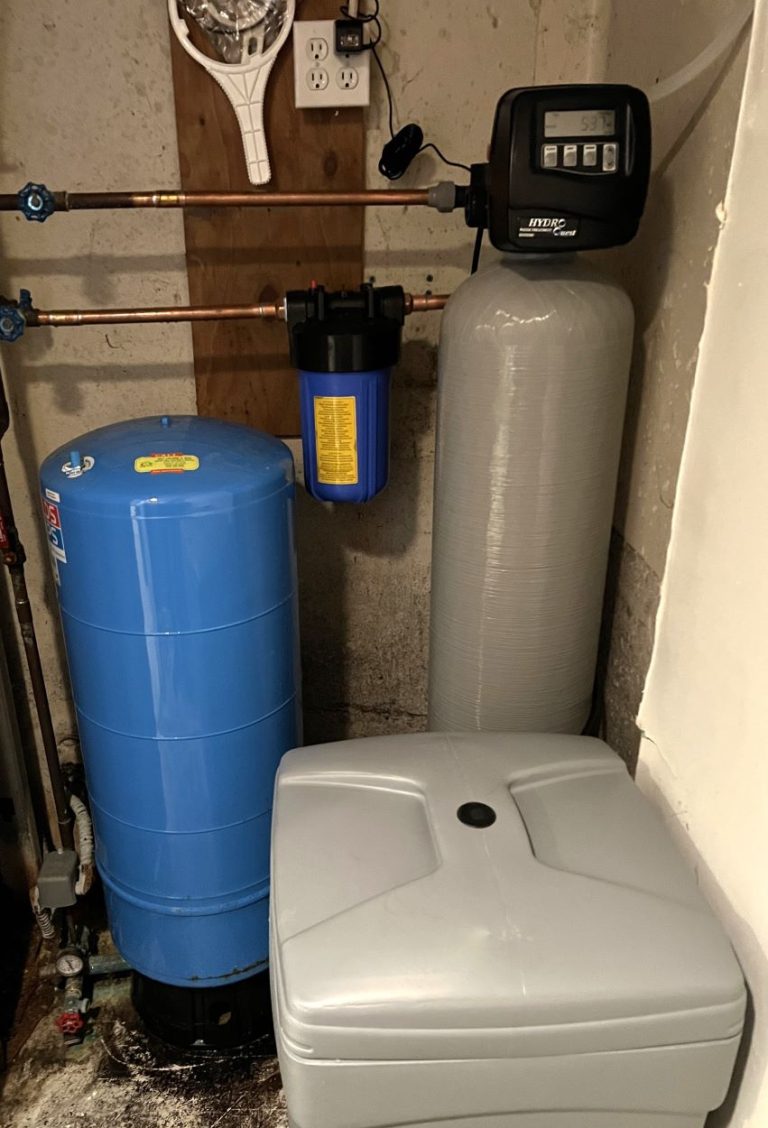
Most softeners have a bypass valve or handle on the plumbing behind the unit. In the bypass position, water flows around the softener and stays hard. Bypass is often turned on during plumbing work, a water heater swap, or a leak repair, and then forgotten. Check your owner’s manual for the correct “service” position.
2. Is there salt, and is it actually reaching the water?
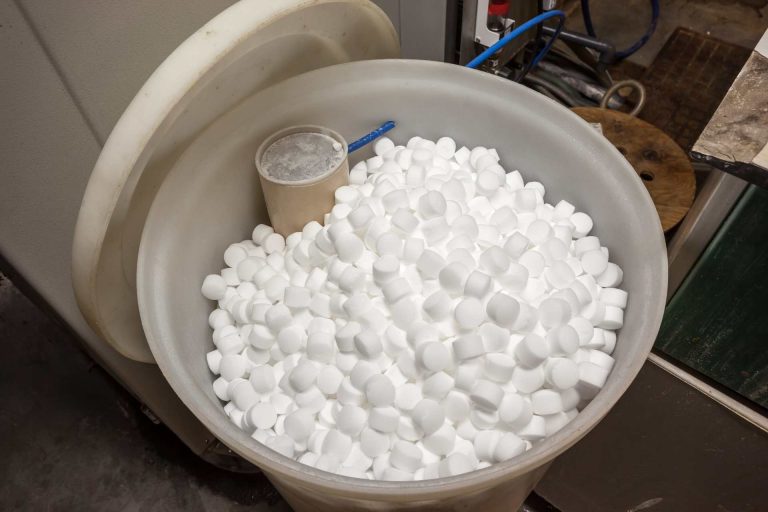
Lift the brine tank lid. An empty tank is the easiest fix there is. A tank that looks full can still be the problem, however. A hard crust, called a salt bridge, can form above an empty pocket so the water never touches the salt. Sludge at the bottom can also block the brine pickup. We explain both in our guide to the types of water softener salt. If hauling bags is the reason the tank runs empty, water softener salt delivery takes that chore off your list.
3. Is the power on and the clock correct?
Check that the softener is plugged in and the outlet works. Next, look at the display. After a power outage, some control valves lose the time of day. As a result, the softener may regenerate in the middle of the afternoon instead of overnight, or skip a cycle. Winter storms make this more common. Reset the time using your manual.
4. Has your water use changed?
Softeners are set up for a certain hardness level and household water use. More people in the house means more water through the resin. That can happen when kids come home from college or relatives stay over the holidays. Likewise, a new well pump or a change in your water source can change the hardness. If the settings no longer match, the resin can run out of capacity before the next regeneration.
5. Is the drain line kinked or frozen?
During regeneration, the softener sends rinse water down a small drain line. If that line is kinked, clogged, or routed through a cold garage or crawl space, it can freeze. When the water cannot drain, the cycle cannot finish properly. Make sure the line runs freely to the drain and stays in a heated space.
6. Is there too much water in the brine tank?
Most softeners keep some water in the brine tank, so a little is normal. However, a tank that is nearly full of water, with salt floating or dissolved away, usually points to a problem. The softener is not drawing brine as it should. Common causes include a plugged injector, a stuck float, or debris in the brine line. This is usually a job for a technician.

Signs your softener needs a technician
If the simple checks do not solve it and your water softener is still not working, the problem is likely inside the system. These signs usually call for professional service:
- Water running to the drain constantly, or the softener stuck in a cycle
- An error code on the display
- Leaks at the control valve or tank fittings
- A sudden drop in water pressure through the softener
- Resin beads showing up in faucet screens or fixtures
- Hard water that returns soon after the softener regenerates
Inside the system, seals and pistons in the control valve wear over time. Resin can also lose capacity as it ages. On well water, iron can coat the resin and reduce its ability to soften. A technician can test the water coming out of the softener, inspect the valve, and clean or adjust what needs it. Our water softener service and repair team works on existing systems, whether or not we installed them.
When the softener is not the real problem
Sometimes the softener is doing its job, but the water has a problem a softener was never meant to treat. A water softener addresses hardness. It is not a cure-all filter. For example:
- Orange or rust stains may point to iron. Read do I need an iron filter or a water softener?
- A rotten-egg odor has several possible sources. See why your water smells like rotten eggs.
- Taste concerns at the kitchen tap are usually a drinking-water question, not a softening one.
That is why we test first. A free water test shows whether hardness is getting through, or whether something else is going on.
Repair, adjust, or replace?
A softener that is not working does not automatically need replacing. Many problems are solved with cleaning, new settings, or a repair part. Replacement starts to make sense when repairs keep adding up, parts are hard to find, or the system no longer fits your water or household. If that is where you are, we can walk you through water softener installation and replacement options after testing your water.
Local softener service around Rochester Hills
Rochester Water Conditioning is based in Rochester Hills and works with both city water and private wells. Homeowners close to our shop can learn more about Rochester Hills water softener repair. On well water to the north, see our water softener service in Lake Orion. Farther west, we also offer water softener service in Brighton.
Quick FAQ
Why is my water softener not working even though it has salt?
Check the bypass valve, the clock, and the brine tank for a salt bridge. If all three look fine, the softener may not be drawing brine, or the settings may not match your water.
Can I reset my water softener myself?
Resetting the time of day is usually simple and covered in the owner’s manual. Many models also allow a manual regeneration. Avoid changing hardness or capacity settings unless you know your current water test results.
How often should a water softener be serviced?
It depends on your water and the equipment. A periodic check helps catch worn parts, iron buildup, and outdated settings before you notice hard water again.
Still not sure? Call Rochester Water Conditioning
A water softener not working right is frustrating, but it is usually fixable. Our approach is simple: test the water, identify the problem, and recommend the right fix. Sometimes that is a reset or a broken salt bridge. Other times it is a repair, an adjustment, or a different kind of treatment. Call us at (248) 651-5238 or contact us online to schedule a softener check or a free water test.