The Complete Guide to Water Softening: Why Every Homeowner Should Understand Their Water
If you’ve ever noticed white spots on your dishes, soap that doesn’t lather well, dry skin after a shower, or stubborn mineral buildup around your faucets, there’s a good chance your home has hard water. Hard water affects millions of homeowners throughout Michigan and can quietly damage plumbing, appliances, and fixtures while making everyday household chores more difficult.
Fortunately, water softening offers a proven solution that protects your home while improving the quality of your water. Understanding how water softeners work and the benefits they provide can help you make an informed decision for your family. Call us today for all your water softener needs.
What Is Hard Water?
Hard water contains elevated levels of naturally occurring minerals, primarily calcium and magnesium. As groundwater travels through limestone and other rock formations, it dissolves these minerals before entering your home’s plumbing system.
Although hard water is generally safe to drink, it can create numerous problems inside your home.
Common signs of hard water include:
- White mineral deposits on faucets and showerheads
- Water spots on dishes and glassware
- Soap scum in showers and bathtubs
- Dry skin and dull hair
- Stiff or faded laundry
- Reduced water heater efficiency
- Scale buildup inside plumbing pipes
- Appliances that wear out prematurely
Michigan is well known for having hard water, making water softeners one of the most common home water treatment systems installed throughout the state.
How Does Water Softening Work?
A water softener removes hardness minerals through a process called ion exchange.
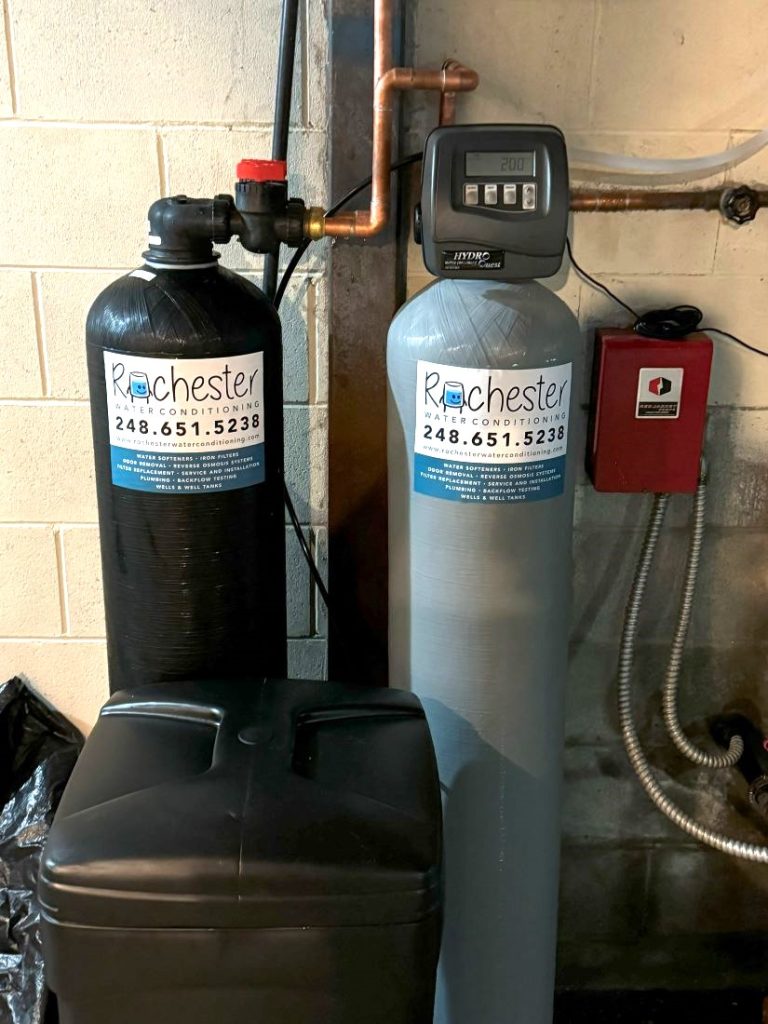
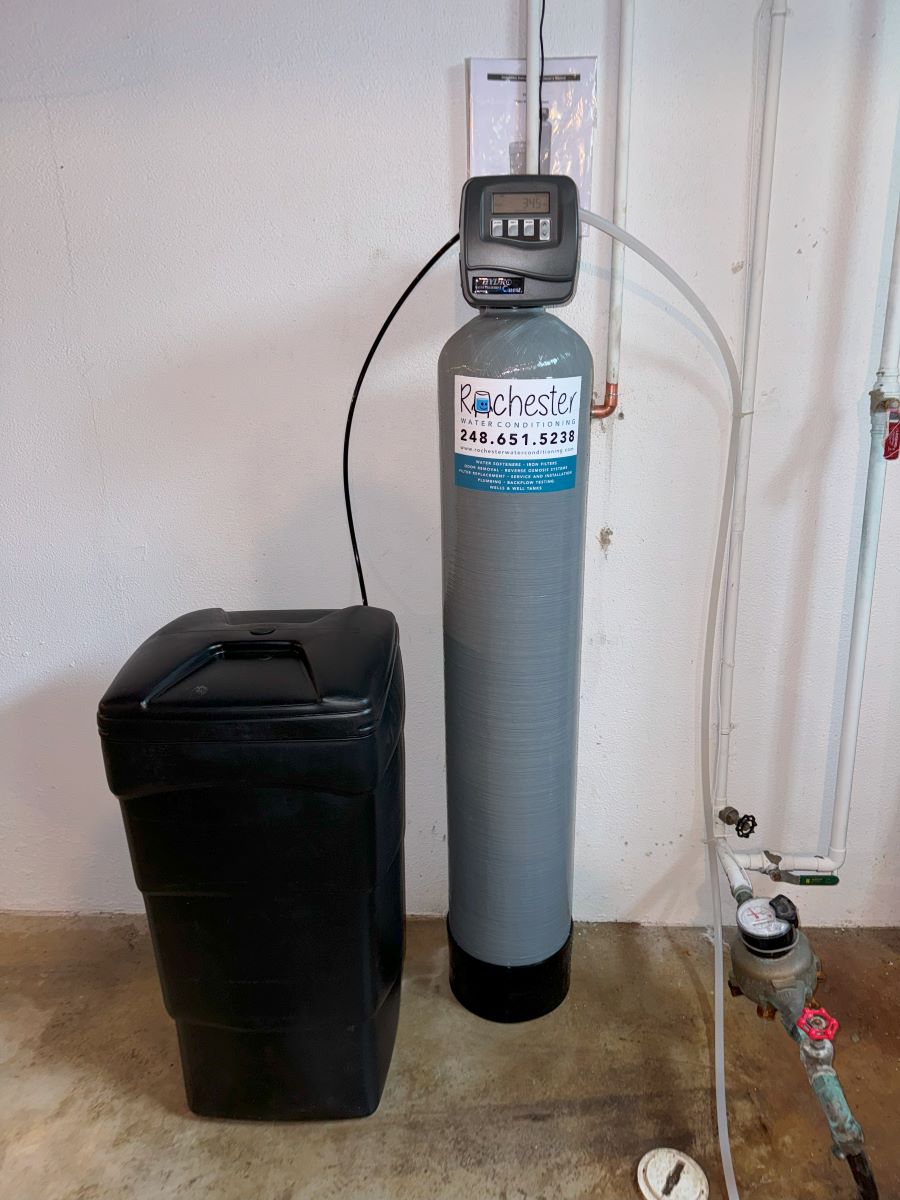
Inside the mineral tank are millions of tiny resin beads charged with sodium or potassium ions. As hard water flows through the resin, calcium and magnesium minerals attach to the beads while sodium or potassium is released into the water. Contact us today for all your water softener needs.
The result is softened water that flows throughout your home’s plumbing system.
Periodically, the water softener automatically regenerates by flushing the captured minerals away with a salt brine solution, preparing the resin for another cycle of water treatment.
This process happens automatically and requires very little homeowner involvement beyond keeping the salt tank filled.
Benefits of Installing a Water Softener
Protect Your Plumbing
Hard water scale slowly builds inside pipes, reducing water flow and increasing strain on your plumbing system. Soft water helps prevent mineral buildup and keeps water flowing efficiently.
Extend Appliance Life
Water heaters, dishwashers, washing machines, coffee makers, and ice makers all perform better when they aren’t constantly exposed to mineral deposits.
Many homeowners find their appliances last longer and require fewer repairs after installing a water softener.
Lower Energy Costs
Just one-quarter inch of mineral scale inside a water heater can significantly reduce efficiency. Soft water allows heating elements to operate more effectively, helping reduce energy consumption.
Easier Cleaning
Soft water allows soaps and detergents to dissolve completely.
That means:
- Cleaner dishes
- Brighter windows
- Less scrubbing
- Fewer cleaning products
- Reduced soap scum
Many homeowners are surprised how much easier routine cleaning becomes.
Softer Skin and Hair
Hard water leaves mineral residue on your skin and hair.
Soft water rinses away more completely, leaving skin feeling smoother and hair softer while reducing dryness and irritation.
Better Laundry
Clothing washed in soft water typically stays brighter, softer, and lasts longer because detergents work more effectively without interference from hardness minerals.
Is Hard Water Harmful?
Hard water isn’t considered a health hazard.
However, it can become expensive over time due to:
- Higher utility bills
- Frequent appliance repairs
- Shortened equipment lifespan
- Increased cleaning product usage
- Plumbing maintenance
- Replacement of fixtures damaged by scale
For many homeowners, the long-term savings from protecting plumbing and appliances offset much of the investment in a quality water softener.
Water Softeners for Well Water
Many Michigan homeowners rely on private wells.
Well water often contains additional contaminants beyond hardness minerals, including:
- Iron
- Manganese
- Sulfur
- Sediment
- Tannins
Because of this, many homes benefit from combining a water softener with an iron filter or whole-house filtration system.
Professional water testing helps determine exactly which treatment system is appropriate.
Water Softeners for City Water
Municipal water can also be very hard.
Even though city water has already been treated for safety, hardness minerals remain.
A residential water softener can improve:
- Taste
- Cleaning performance
- Appliance efficiency
- Plumbing protection
- Water heater performance
- Fixture appearance
Choosing the Right Water Softener
Not every water softener is the same.
Selecting the proper system depends on several factors including:
- Water hardness
- Household size
- Daily water usage
- Iron content
- Plumbing configuration
- Future water needs
Oversized and undersized systems both create unnecessary costs and reduced efficiency.
A professional water analysis ensures the equipment is properly sized for your home.
The Importance of Regular Maintenance
Like any home appliance, water softeners perform best with periodic maintenance.
Routine service may include:
- Checking salt levels
- Cleaning the brine tank
- Inspecting valves
- Testing hardness removal
- Sanitizing the system
- Replacing worn components when necessary
Regular maintenance helps maximize system life and keeps your water consistently soft.
Why Professional Water Testing Matters
Every water supply is different.
Two neighboring homes may have completely different water chemistry depending on the water source, plumbing, and geological conditions.
Professional water testing identifies:
- Hardness
- Iron
- pH
- Total dissolved solids
- Sulfur
- Manganese
- Other water quality concerns
With accurate results, a customized treatment system can be recommended rather than relying on guesswork.
Why Homeowners Trust Rochester Water Conditioning
For decades, Rochester Water Conditioning has helped homeowners improve their water with customized water treatment solutions.
Our services include:
- Water softener installation
- Water softener repair
- Water softener maintenance
- Water softener salt delivery
- Iron filtration systems
- Reverse osmosis drinking water systems
- Whole-house water filtration
- Water testing
- Well water treatment
- Plumbing services
- Backflow testing
We take the time to understand your water, explain your options, and recommend solutions that fit your home’s needs—not simply sell equipment.
Ready for Better Water?
If you’re tired of hard water stains, mineral buildup, dry skin, or appliances that don’t perform like they should, a professionally installed water softener can make a noticeable difference throughout your home.
Contact Rochester Water Conditioning today to schedule a professional water test and discover the right water treatment solution for your home. Clean, soft water is an investment that protects your plumbing, extends the life of your appliances, and improves your everyday quality of life.